



Australia is a top destination for Indian students who wish to pursue engineering after completing their 12th grade. The country is known for its globally recognized universities, advanced research facilities, and industry-aligned curriculum. For students aspiring to become professional engineers, Australia offers a wide range of courses, specializations, and opportunities for international exposure. This guide highlights the best Australian universities for engineering, their programs, and what makes them ideal for Indian students.
Why Study Engineering in Australia After 12th?
Choosing to study engineering in Australia provides numerous advantages for Indian students. The Australian Qualifications Framework (AQF) guarantees degrees that are recognized globally. Students benefit from a blend of theoretical learning, hands-on experience, and exposure to cutting-edge technology.
Engineering graduates from Australia have excellent employment prospects both locally and internationally, with opportunities in civil, mechanical, electrical, software, and mining sectors. Additionally, universities often provide industry internships, making students job-ready and giving them an edge in the global market.

Eligibility Criteria for Indian Students
To apply for engineering courses in Australia after 12th, Indian students typically need:
- Academic Requirements: A minimum of 60–70% in Class 12th (higher for competitive streams like medicine-related engineering).
- English Proficiency: IELTS overall 6.0–6.5 or equivalent PTE/TOEFL scores.
- Documentation: Academic transcripts, Statement of Purpose, Letters of Recommendation, and a valid passport.
Some universities, such as the University of Melbourne and Monash University, also offer foundation or bridging courses for students who need to strengthen their English or subject knowledge.
Top Australian Universities for Engineering
University of Melbourne
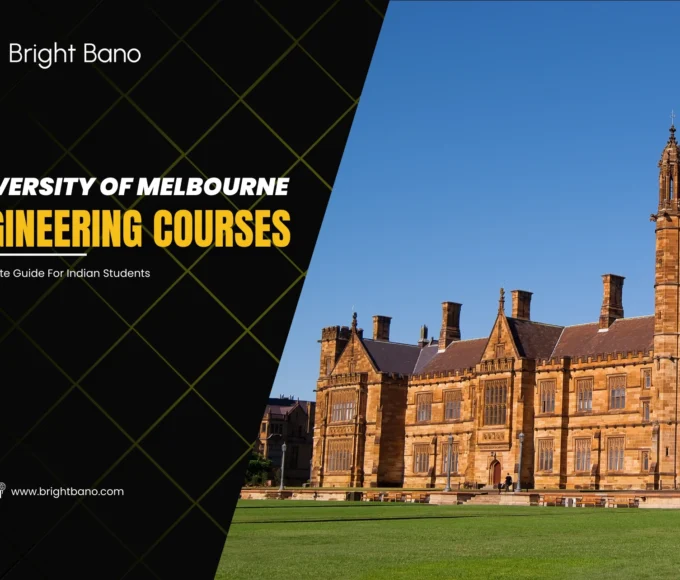
The University of Melbourne consistently ranks among the top universities worldwide. Its Bachelor of Engineering (Honours) offers specializations in Civil, Mechanical, Electrical, Software, and Mechatronics Engineering. The university emphasizes research and innovation, with students gaining exposure to advanced labs and industry collaborations. Its graduates often secure positions in top engineering firms and research institutions globally.
University of Sydney
The University of Sydney is renowned for its Bachelor of Engineering (Honours) programs, including Aerospace, Chemical, and Biomedical Engineering. Students have access to cutting-edge research facilities, including robotics labs and sustainable engineering centers. Its focus on innovation, teamwork, and problem-solving prepares Indian students for careers in both academia and industry.
University of New South Wales (UNSW Sydney)
UNSW Sydney is highly respected for programs in Mining and Petroleum Engineering, Electrical and Computer Engineering, and Civil Engineering. Known for strong industry linkages, students can take part in internships, co-op programs, and research projects. UNSW graduates are often sought after by leading multinational engineering firms.
Australian National University (ANU)
ANU provides an interdisciplinary approach with its Bachelor of Engineering, offering pathways into Environmental, Civil, and Electrical Engineering. The university focuses on sustainability, research excellence, and innovative approaches. Students benefit from participating in cutting-edge projects addressing real-world engineering challenges.
Monash University
Monash University offers a wide array of engineering programs through its Bachelor of Engineering (Honours), including Civil, Mechanical, Electrical, and Chemical Engineering. Monash’s strong industry partnerships allow students to gain practical experience during their studies, preparing them for careers in multinational companies.
University of Queensland (UQ)
UQ’s engineering programs provide Bachelor of Engineering (Honours) degrees across disciplines such as Civil, Chemical, and Electrical Engineering. Students have opportunities to engage in research at world-class facilities, such as sustainable energy labs and robotics centers. UQ graduates are well-positioned for careers in both Australia and abroad.
University of Technology Sydney (UTS)
UTS focuses on practical learning and industry engagement. Its Bachelor of Engineering emphasizes Software, Electrical, and Civil Engineering, with students completing projects in collaboration with local companies. This ensures graduates are industry-ready and skilled in problem-solving and project management.
RMIT University
RMIT University is known for its hands-on-learning approach to engineering education. Programs include Aerospace, Civil, and Mechanical Engineering, combined with industry internships and live projects. RMIT’s focus on employability ensures students graduate with practical experience and a strong professional network.
University of Adelaide
The University of Adelaide provides a comprehensive Bachelor of Engineering, allowing students to specialize in Electrical, Mechanical, and Civil Engineering. Its curriculum emphasizes research, innovation, and real-world problem-solving. Indian students benefit from small class sizes, personalized mentoring, and industry exposure.
University of South Australia (UniSA)
UniSA emphasizes practical experience and offers Bachelor of Engineering (Honours) programs in Civil, Mechanical, Electrical, and Software Engineering. Students can work on real-world projects in collaboration with industry leaders, ensuring they graduate with both academic knowledge and professional experience.
Scholarships for Indian Students
Many universities offer scholarships specifically for international students, including Indian applicants. Examples include:
1. University of Melbourne International Undergraduate Scholarship
2. Monash International Merit Scholarship
3. Sydney Scholars India Equity Scholarship
4. UNSW Global Academic Award
Students are encouraged to research early and apply online, submitting strong academic records and extracurricular achievements to enhance their chances.
Cost of Studying and Living
Studying engineering in Australia involves tuition fees ranging from AUD 30,000 to 45,000 per year, depending on the university and program. Living expenses average AUD 15,000–25,000 annually, covering accommodation, food, transport, and personal costs. Cities like Melbourne and Sydney are slightly more expensive than Brisbane or Adelaide, but they offer vibrant student life and networking opportunities.
Many students work part-time (up to 20 hours per week) during semesters to support their expenses.
Career Opportunities and Post-Study Work
Graduates from Australian engineering programs enjoy strong global employability. Top career paths include Civil Engineer, Mechanical Engineer, Electrical Engineer, Software Developer, Mining Engineer, and Aerospace Engineer.
Additionally, Indian students may be eligible for the Post-Study Work Visa, which allows them to gain professional experience in Australia after completing their degree.
How to Choose the Right Engineering Course
When choosing a course, consider:
- Your interests – Mechanical, Civil, Electrical, Software, or specialized fields like Aerospace and Petroleum.
- University reputation – QS and Times Higher Education rankings are useful indicators.
- Industry connections – Check if the university provides internships and co-op opportunities.
- Location and living costs – Consider affordability and lifestyle preferences.
For example, students interested in Software Engineering may prefer University of Melbourne or UTS, while those aiming for Mining or Petroleum Engineering may consider UNSW Sydney.
Conclusion
Australia offers Indian students world-class engineering education with diverse courses, specializations, and career opportunities. Universities like University of Melbourne, Monash University, UNSW Sydney, University of Sydney, ANU, UQ, UTS, RMIT, University of Adelaide, and UniSA provide excellent academic programs combined with practical experience and research exposure.
By carefully selecting a course and university, considering career prospects, scholarships, and lifestyle factors, Indian students can maximize their education and career potential in Australia. With the right preparation, studying engineering in Australia after 12th can be a life-changing experience, opening doors to global opportunities and professional success.






Leave a comment